External Penetration Testing Services for SaaS Companies and Compliance-Driven Organizations
We test your internet-facing infrastructure the way a real attacker would, mapping exposed services, validating exploitability, and delivering findings your team can act on before a breach forces the issue.

Simulating Threats

Streamlining Remediation

Ensuring Compliance
Secure Your Internet-Facing Infrastructure
Every organization with an online presence has an external attack surface that real adversaries actively probe. For SaaS startups and compliance audit firms, a single misconfigured service or exposed endpoint is all it takes for a targeted attacker to find a way in.
Our external penetration testing goes beyond automated port scans. We conduct manual-led assessments of your internet-facing assets, validating real exploitability and simulating actual attack paths, so whether you are a SaaS company approaching a SOC 2 Type II audit or a compliance consultancy that needs a specialist testing partner, our findings are credible and immediately actionable.

What We Assess in an External Penetration Test
Our certified offensive security professionals examine every externally accessible asset across your environment. This includes internet-facing web applications, APIs exposed to the public, DNS and mail infrastructure, cloud storage entry points, VPN endpoints, remote access services, and any third-party integrations that extend your external attack surface. We do not limit assessment to known assets. Part of our engagement methodology involves enumerating assets your team may not have mapped, because attackers will find them regardless.
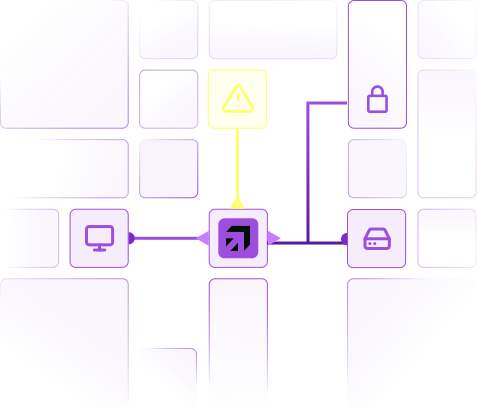
Attack Surface Mapping
Full enumeration of publicly accessible assets including subdomains, exposed ports, open services, and third-party integrations that extend your perimeter.
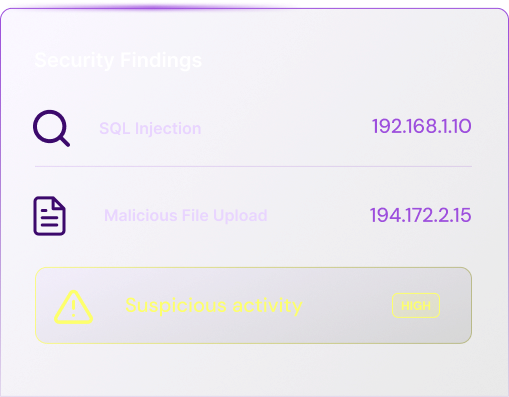
Service and Configuration Exploitation
Manual testing of exposed services for misconfigurations, default credentials, unpatched vulnerabilities, and insecure cryptographic implementations.
.svg)
Perimeter Breach Simulation
Controlled simulation of real-world attack paths, including chained exploitation attempts that reflect the techniques used in actual network intrusions.
Built for SaaS Companies and Compliance Audit Firms
Penetration Testing for SaaS Startups
SaaS startups move fast, ship features frequently, and often carry customer data that makes them attractive targets. External penetration testing for SaaS startups gives your security team verified evidence of real-world risk across your internet-facing attack surface, not a list of theoretical CVEs. We test the endpoints, authentication systems, token handling, and exposed APIs that your users and enterprise buyers expect to be secure. Our findings are scoped to match your architecture, so remediation is practical and not buried in noise.
Typical triggers: SOC 2 Type II readiness, pre-launch security review, enterprise sales security questionnaire, investor due diligence.
Penetration Testing Partner for Compliance Audit Firms
Audit firms and managed security service providers require offensive security partners who deliver technically rigorous, independently verified reports their clients and auditors can rely on. As a penetration testing partner for compliance audit firms, IVASTA Security provides thorough external assessments that satisfy SOC 2, PCI DSS, ISO27001, and HIPAA evidence requirements. Every report is produced by certified professionals, documented with validated findings, and structured to meet the expectations of third-party reviewers without requiring additional interpretation.
We support white-label and referral arrangements for firms that need a trusted external testing arm for client engagements.
A Structured Process from Scoping to Remediation Validation
Every IVASTA Security engagement follows a three-phase methodology that ensures technical depth, clear communication, and measurable risk reduction from the initial scoping call through to validated remediation.
Scoping and Planning
Penetration Testing
Reporting and Retest Validation
.svg)
Stay Ahead of Real-World Threats
External threats are not theoretical. Opportunistic attackers and targeted adversaries continuously probe internet-facing systems for weaknesses that automated security tools miss or under-prioritize. Our methodology is designed to find those weaknesses before they become incidents.
What our external penetration testing identifies:
- Publicly exploitable vulnerabilities in internet-facing systems
- Port and service exposure across your registered and shadow asset inventory
- OSINT and digital footprint risks including data leakage through public sources
- Authorization bypass attacks targeting externally accessible applications
- Configuration weaknesses in web servers, cloud endpoints, and network infrastructure
- Insecure data handling through exposed APIs and public-facing storage
- Outdated and unsupported services that represent low-effort entry points
- Cryptographic failures including weak cipher suites and certificate misconfigurations


.svg)
Our Methodology
We operate with an 80% manual, 20% automated approach. Automated tools support reconnaissance and surface-level asset enumeration, but our certified professionals conduct the actual exploitation attempts, logic-chain testing, and business impact analysis. This matters because automated scanners cannot reason about business context, identify chained exploitation paths, or recognize environment-specific misconfigurations that fall outside known vulnerability signatures.
Our testers hold OSCP, OSCP+, OSEP, OSWE, CREST, Certified Red Team Professional, and Burp Suite Certified Practitioner certifications. These are examination-based qualifications that validate hands-on offensive capability, not vendor-sponsored marketing credentials. Every engagement is conducted by professionals who have demonstrated the ability to think and operate like a real attacker.
Retest Assessment
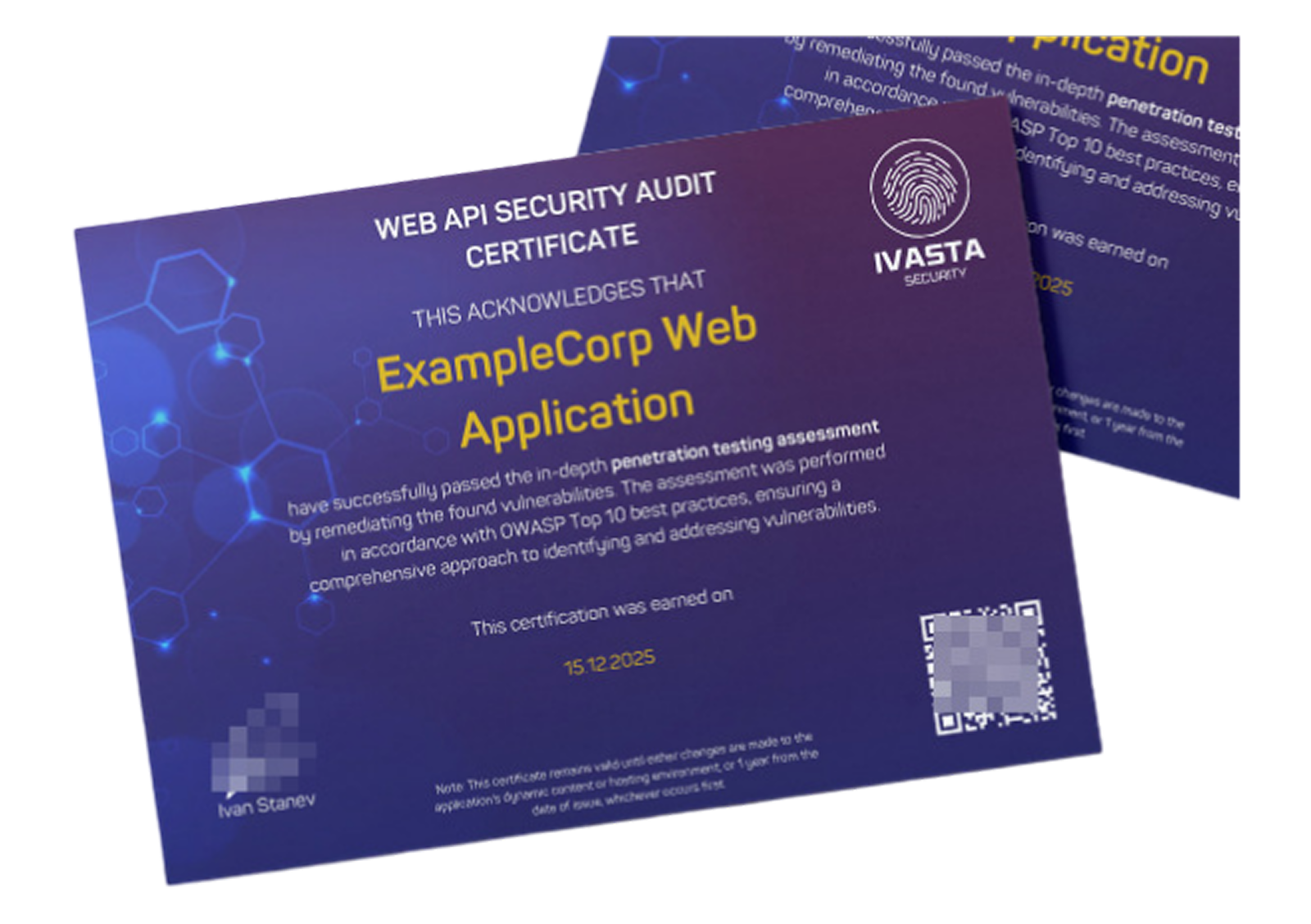
Fixing a vulnerability and verifying that the fix actually holds are two different things. Our optional retest assessment confirms that every identified weakness has been correctly remediated and is no longer exploitable under real conditions. Upon successful completion, we issue a digitally signed verification certificate that serves as formal evidence for compliance auditors, enterprise buyers, and internal governance requirements. This closes the loop on your engagement and gives your stakeholders documented assurance rather than an assumption.
Do Not Wait for a Breach to Discover Your Weaknesses
See What We Can Do For You
Stay ahead of real-world threats
Our Methadology
Lorem ipsum dolor sit amet consectetur adipiscing eli mattis sit phasellus mollis sit aliquam sit nullam.
Lorem ipsum dolor sit amet consectetur adipiscing eli mattis sit phasellus mollis sit aliquam sit nullam.Lorem ipsum dolor sit amet consectetur adipiscing eli mattis sit phasellus mollis sit aliquam sit nullam.Lorem ipsum dolor sit amet consectetur adipiscing eli mattis sit phasellus mollis sit aliquam sit nullam.
Frequently Asked Questions
What is external penetration testing and how is it different from a vulnerability scan?
.svg)
A vulnerability scan uses automated tools to catalog known weaknesses across your internet-facing systems. External penetration testing goes further by having certified professionals manually attempt to exploit those weaknesses, chain multiple issues together, and simulate the actual attack paths that real adversaries use. A scan tells you what might be wrong. An external penetration test shows you what can actually be done with it.
Why do SaaS startups need external penetration testing?
SaaS startups handle customer data, operate with public-facing APIs, and often face security scrutiny from enterprise buyers and compliance auditors before they have a mature internal security function. External penetration testing for SaaS startups gives you validated, independent evidence of your security posture, which satisfies SOC 2 Type II requirements, reduces risk before major product launches, and builds the trust that enterprise sales cycles demand.
How does IVASTA Security work with compliance audit firms?
We work with audit firms and compliance consultancies as a specialist offensive security partner. As a penetration testing partner for compliance audit firms, we deliver technically detailed, independently verified external assessments that meet the evidence standards for SOC 2, PCI DSS, ISO 27001, and HIPAA audits. Reports are structured to satisfy third-party reviewer expectations and are produced by professionals, not scanning tools. We support white-label and referral arrangements depending on the engagement model your firm requires.
What does an external penetration test typically cover?
A standard external penetration test covers all publicly accessible assets: internet-facing web applications and APIs, DNS infrastructure, mail servers, VPN and remote access endpoints, cloud storage entry points, and any third-party integrations visible from the public internet. We also conduct OSINT and digital footprint analysis to identify assets and data exposure your team may not have formally cataloged.
How long does an external penetration testing engagement take?
Most focused external penetration tests take between one and two weeks from the start of testing to final report delivery. Engagements covering broader asset inventories or multiple environments may require additional time. Timelines are defined during the scoping phase so you have accurate expectations before testing begins.
Will penetration testing cause disruption to our production systems?
A professionally managed external penetration test is conducted within a controlled methodology designed to identify vulnerabilities without causing downtime or data loss. Any high-risk techniques that could affect system stability are discussed and agreed upon during scoping. Testing against production environments is common practice when handled by experienced professionals operating within a defined rules of engagement.
What compliance frameworks require external penetration testing?
External penetration testing is required or strongly recommended by SOC 2 Type II, PCI DSS, ISO 27001, HIPAA, NIST 800-53, and FedRAMP. Enterprise security questionnaires from prospective buyers increasingly require recent evidence of third-party external penetration testing as part of their vendor due diligence process.
How is external penetration testing scoped for a SaaS product with multiple environments?
Scoping for SaaS environments starts with a thorough discovery call where we map your public-facing infrastructure, including production domains, staging environments accessible from the internet, API gateways, authentication endpoints, and any third-party integrations that extend your attack surface. We agree on what is in scope, what is out of scope, and what rules of engagement apply to each environment before testing begins. This prevents scope creep, protects environments that carry real customer data from unnecessary risk, and ensures our testing time is focused where exposure is highest. For SaaS companies operating in regulated sectors, we also align scope with the specific control areas being tested for SOC 2 or PCI DSS audit evidence.
What deliverables does IVASTA Security provide after an external penetration test?
Every engagement closes with a structured penetration testing report that includes an executive summary written for non-technical stakeholders, a detailed technical findings section with evidence of exploitation, severity ratings aligned to real-world business impact rather than raw CVSS scores, and clear remediation guidance your development or infrastructure team can act on without interpretation. For compliance use cases, the report is structured to satisfy third-party auditor evidence requirements. Clients who opt for the retest assessment also receive a digitally signed remediation verification certificate, which provides formal documented assurance that identified vulnerabilities have been correctly resolved.
Can external penetration testing be conducted on a white-label basis for audit firm clients?
Yes. IVASTA Security works with compliance audit firms and MSSPs as a specialist offensive security partner on both a white-label and referral basis. When operating as a white-label penetration testing partner, we conduct the external assessment and produce a report that your firm presents directly to your client under your own brand. The technical depth, certification credentials behind the work, and report quality remain consistent regardless of the arrangement. This model is particularly suited to audit firms that need an independent, third-party technical assessment to satisfy evidence requirements for SOC 2, PCI DSS, or ISO 27001 audits but do not maintain an in-house offensive security team. Engagement terms and confidentiality requirements are agreed upon before any assessment begins.
Let's Protect Your
Business Now!