Cloud Security Assessment for AWS, Azure, and GCP Environments
We evaluate your cloud infrastructure the way real threat actors do, identifying misconfigured resources, overprivileged identities, and exploitable trust relationships across your AWS, Azure, and GCP environments before they become breach vectors.

Simulating Threats

Streamlining Remediation

Ensuring Compliance
Secure Your Cloud Infrastructure
Cloud environments move fast and scale constantly. Every new resource provisioned, every permission granted, and every storage bucket created extends the surface area that attackers assess for weaknesses. Organizations running workloads on AWS, Azure, or GCP often accumulate misconfigurations and overpermissioned identities quietly, without realising the exposure they represent until something goes wrong.
A cloud security assessment from IVASTA Security examines your environment the way an attacker would. We go beyond checklist-based configuration reviews to evaluate real exploitation paths, identity relationships, and trust boundaries across your cloud architecture. Whether you are preparing for a SOC 2 Type II audit, addressing findings from a recent risk review, or simply want to understand your actual cloud security posture, our assessments produce findings your team can act on.

What We Assess in a Cloud Security Assessment
Our certified offensive security professionals examine the full scope of your cloud environment across all major platforms. We assess identity and access management configurations, resource-level permissions, network security group rules, storage and data exposure, cross-account trust relationships, service-to-service permissions, and the exploitation paths that weak configurations create when combined.
We do not restrict our review to resources your team has formally documented. Part of our methodology involves enumerating assets and permissions that may have been provisioned without formal review, because attackers will find them regardless of whether they appear in your internal asset register.
Our cloud security assessment covers:
Identity and Access Management Review
Full evaluation of IAM roles, policies, users, and service accounts across AWS, Azure, and GCP. We identify overpermissioned identities, unused accounts, and privilege escalation paths that exceed least-privilege boundaries.
Cloud Misconfiguration Analysis
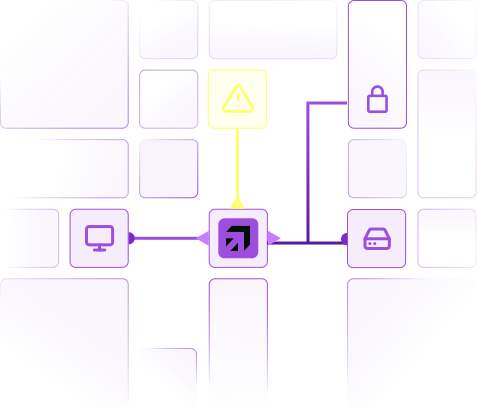
Systematic review of resource configurations across compute, storage, database, and networking services. We identify exposed services, publicly accessible buckets, weak security group rules, and insecure default settings that expand your attack surface.
.svg)
Privilege Escalation and Lateral Movement
Controlled simulation of how an attacker with limited initial access could escalate privileges or move laterally across cloud resources. We test chained exploitation paths that reflect real-world cloud intrusion techniques across multi-cloud environments.
Built for Cloud-Dependent Teams and Compliance-Driven Organizations
Cloud Security Assessment for SaaS and Cloud-Native Organizations
SaaS companies and cloud-native teams build and deploy at speed, which means security configurations are often set during early development and rarely revisited as infrastructure scales. A cloud security assessment gives your team a verified, independent view of the identity risks, misconfigured services, and excessive permissions accumulating in your AWS, Azure, or GCP environment. Our findings map directly to real exploitation paths, not theoretical CVE lists, so your engineers know exactly what to fix and why it matters. Common triggers include SOC 2 Type II readiness, pre-launch infrastructure review, enterprise buyer security questionnaires, and investor or board-level risk requests.
Cloud Security Testing Partner for Compliance Audit Firms
Audit firms and managed security service providers need offensive security partners who can deliver technically credible, independently verified cloud security assessments their clients and auditors can rely on. IVASTA Security provides cloud assessments that help organizations demonstrate security due diligence and support evidence collection for frameworks such as SOC 2, PCI DSS, ISO 27001, and HIPAA. Every report is produced by certified professionals with hands-on cloud testing experience, structured to meet the expectations of third-party reviewers. We support white-label and referral arrangements for firms that need a trusted external security testing arm for client engagements.
A Structured Process from Scoping to Remediation Validation
Every IVASTA Security engagement follows a three-phase methodology that ensures technical depth, clear communication, and measurable risk reduction from the initial scoping call through to validated remediation.
Scoping and Planning
Cloud Security Testing
Reporting and Retest Validation
A Structured Process from Scoping to Remediation Validation
Every IVASTA Security engagement follows a three-phase methodology that ensures technical depth, clear communication, and measurable risk reduction from the initial scoping call through to validated remediation.
Phase 01 — Scoping and Planning
We define your cloud environment scope, the platforms under assessment, access levels, testing environments, timelines, and reporting expectations. Scoping is thorough so testing begins with full clarity and without scope drift.
Phase 02 — Cloud Security Testing
Our certified offensive security professionals simulate realistic attack scenarios across the agreed cloud scope. Each finding is manually validated for exploitability and assessed against genuine business impact, not just compliance checklists.
Phase 03 — Reporting and Retest Validation
You receive structured, prioritized findings with clear remediation guidance and severity ratings. Once fixes are applied, we conduct a formal retest and issue a signed verification certificate confirming remediation.
.svg)
Stay Ahead of Real-World Cloud Threats
Cloud breaches rarely result from zero-day vulnerabilities. The most common entry points are misconfigured resources, overpermissioned service accounts, and trust relationships that were never reviewed after initial setup. Attackers probe these systematically, and automated cloud security platforms provide valuable visibility but often lack the context required to fully evaluate complex attack paths, business impact, and organization-specific trust relationships.
Our cloud security assessment methodology is designed to identify those paths before they become incidents.
What our cloud security assessment identifies:
- Identity and access management risks including over-permissive roles, unused service accounts, and policy misconfigurations across AWS IAM, Azure Active Directory, and GCP IAM
- Privilege escalation paths that allow low-privilege identities to gain elevated access across cloud resources
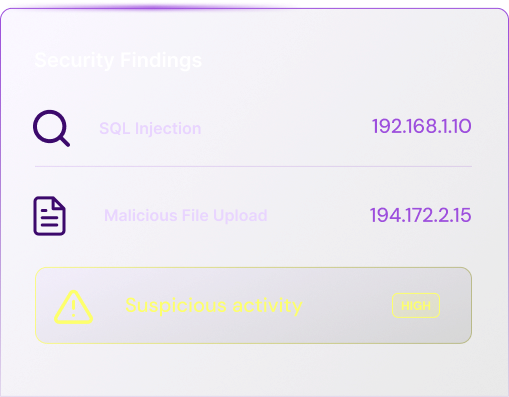
- Misconfigured cloud resources including exposed storage buckets, open security group rules, and unprotected database instances
- Cross-account and cross-service trust weaknesses that allow lateral movement between cloud environments
- Insecure network configurations including permissive firewall rules, publicly routable private services, and unsegmented virtual networks
- Exposed data and storage including publicly readable object stores, unencrypted snapshots, and data accessible without authentication
- Excessive role abuse and over-permissive IAM policies that violate least-privilege principles
- Service-to-service trust misconfiguration that allows workloads to access resources beyond their intended scope


.svg)
Our Methodology
Our cloud security assessments typically begin with read-only access to the cloud environment whenever possible. This approach mirrors a common real-world attack scenario in which an adversary gains access to a low-privilege account, exposed credential, or compromised identity.
Starting from a restricted access level allows us to evaluate privilege escalation opportunities, excessive permissions, trust relationships, identity misconfigurations, and attack paths that could enable an attacker to expand their access within the environment.
By assessing security from the perspective of a minimally privileged user, we can identify risks that may not be apparent when reviewing configurations from an administrative account.
Our professionals hold OSCP, OSCP+, OSEP, OSWE, CREST, AWS SecuritySpecialty, Azure Security Engineer, GCP Security Engineer, Certified Red Team Professional, and Burp Suite Certified Practitioner certifications. These are examination-based qualifications that validate hands-on offensive and cloud security capability. Every cloud security assessment is conducted by professionals who have demonstrated the technical ability to identify and evaluate the identity, configuration, and trust relationship weaknesses that cloud environments routinely surface.
Retest Assessment
Fixing a misconfiguration and confirming the fix actually holds are two different things. Our optional retest assessment verifies that every identified weakness in your AWS, Azure, or GCP environment has been correctly remediated and is no longer exploitable under real conditions.
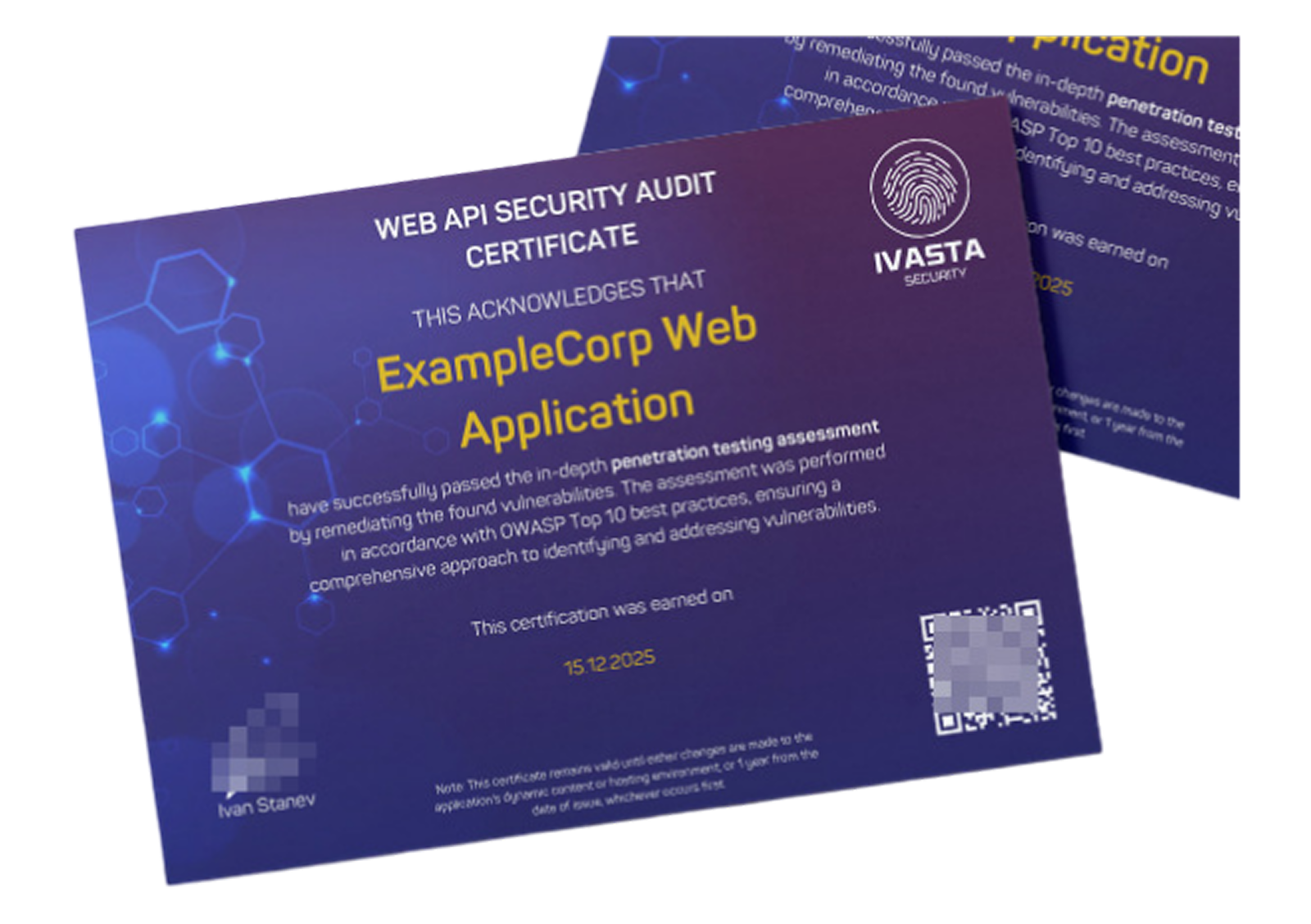
Upon successful completion, we issue a digitally signed verification certificate that serves as formal evidence for compliance auditors, enterprise buyers, and internal governance requirements. This closes the loop on your cloud security assessment engagement and gives your stakeholders documented assurance rather than an assumption.
Do Not Wait for a Misconfiguration to Become a Breach
Stay ahead of real-world threats
See What We Can Do For You
Our Methadology
Lorem ipsum dolor sit amet consectetur adipiscing eli mattis sit phasellus mollis sit aliquam sit nullam.
Lorem ipsum dolor sit amet consectetur adipiscing eli mattis sit phasellus mollis sit aliquam sit nullam.Lorem ipsum dolor sit amet consectetur adipiscing eli mattis sit phasellus mollis sit aliquam sit nullam.Lorem ipsum dolor sit amet consectetur adipiscing eli mattis sit phasellus mollis sit aliquam sit nullam.
Frequently Asked Questions
What is a cloud security assessment and how is it different from a cloud vulnerability scan?
.svg)
A cloud vulnerability scan uses automated tools to flag configuration differences against known benchmarks. A cloud security assessment goes further by having certified professionals evaluate real-world exploitation paths, identity relationship chains, and trust boundary weaknesses that automated tools cannot reason about. A scan tells you where configurations deviate from a standard. A cloud security assessment tells you what an attacker can actually do with those deviations in your specific AWS, Azure, or GCP environment.
Which cloud platforms does IVASTA Security assess?
We conduct cloud security assessments across Amazon Web Services (AWS), Microsoft Azure, and Google Cloud Platform (GCP). We also assess multi-cloud environments where workloads and identities span more than one platform, which often creates trust relationship weaknesses that are not visible when each platform is reviewed in isolation.
What does a cloud security assessment typically cover?
A cloud security assessment covers identity and access management configurations, resource-level permission policies, network security group rules, storage and data exposure, compute and container configurations, cross-account and cross-service trust relationships, and the privilege escalation paths that misconfigured resources create when combined. We also assess OSINT-visible cloud exposure, including publicly indexed storage resources and metadata endpoints accessible from outside your environment.
Which compliance frameworks require cloud security assessments?
Cloud security assessments are required or strongly recommended by SOC 2 Type II, PCI DSS, ISO 27001, HIPAA, NIST 800-53, and FedRAMP. Enterprise security questionnaires from prospective buyers increasingly require recent third-party cloud security assessments as part of vendor due diligence, particularly for organizations storing customer data in cloud environments.
How long does a cloud security assessment engagement take?
Most focused cloud security assessments take between one and two weeks from the start of testing to final report delivery. Engagements covering multi-cloud environments, larger infrastructure footprints, or additional service categories may require more time. Timelines are defined during the scoping phase so you have accurate expectations before testing begins.
Will a cloud security assessment affect our production environment?
A professionally managed cloud security assessment is conducted within a controlled methodology that identifies weaknesses without disrupting live workloads or data. Any testing techniques that carry operational risk are discussed and agreed upon during scoping. Testing against production cloud environments is standard practice when conducted by certified professionals operating under a defined rules of engagement.
How does IVASTA Security work with compliance audit firms on cloud security?
We work with audit firms and compliance consultancies as a specialist cloud security testing partner. Our assessments help organizations demonstrate security due diligence and support evidence collection for frameworks such as SOC 2, PCI DSS, ISO 27001, and HIPAA. Reports are produced by certified professionals and written to meet the expectations of third-party reviewers. We support white-label and referral arrangements for firms that need an independent external cloud security assessment capability for client engagements.
What deliverables does IVASTA Security provide after a cloud security assessment?
Every engagement closes with a structured cloud security assessment report that includes an executive summary for non-technical stakeholders, a detailed technical findings section with evidence of exploitability, severity ratings aligned to real-world business impact, and clear remediation guidance your cloud engineering team can act on. For compliance use cases, the report is structured to satisfy third-party auditor evidence requirements. Clients who opt for the retest assessment also receive a digitally signed remediation verification certificate.
Can the cloud security assessment be conducted on a white-label basis?
Yes. IVASTA Security works with compliance audit firms and MSSPs as a cloud security testing partner on both a white-label and referral basis. When operating as a white-label partner, we conduct the full assessment and produce a report your firm presents under your own brand. The technical depth, certification credentials, and report quality remain consistent regardless of the arrangement. Engagement terms and confidentiality requirements are agreed upon before any assessment begins.
How is a cloud security assessment scoped for a multi-cloud environment running AWS, Azure, and GCP?
Scoping for multi-cloud environments starts with a thorough discovery call where we map your full infrastructure footprint across each platform, including the identity relationships, trust boundaries, and cross-platform integrations that span more than one provider. We agree on which cloud accounts, subscriptions, and projects are in scope, what access levels are required, and what rules of engagement apply before testing begins. For organizations running workloads across AWS, Azure, and GCP simultaneously, we also evaluate the cross-cloud trust relationships that create privilege escalation paths not visible when each platform is reviewed in isolation. Scope is documented and agreed upon before any testing activity starts so there is no ambiguity about what is covered and what is not.
Let's Protect Your
Business Now!