Internal Penetration Testing Services for Startups and SOC 2 Audit Readiness
We simulate what happens after an attacker gets inside, mapping lateral movement paths, credential exposure, and privilege escalation chains before a real breach reveals them.

Simulating Threats

Streamlining Remediation

Ensuring Compliance
Internal Network Security Testing
Most security investment is focused on keeping attackers out. Internal penetration testing addresses what happens when that perimeter is breached, an endpoint is compromised, or a malicious insider already has a foothold. For startups building toward SOC 2 compliance and for organizations that need third party penetration testing for a SOC 2 audit, understanding how far an attacker can move inside your environment is as important as locking the front door.
Our internal penetration testing simulates a real assumed breach scenario. We assess lateral movement paths, privilege escalation opportunities, credential exposure, Active Directory weaknesses, and internal attack chains to show exactly how far a compromise could progress and what controls are missing. Findings are manually validated and delivered with remediation guidance your team can act on immediately.

What We Assess in an Internal Penetration Test
Our certified offensive security professionals operate from an assumed breach position, starting with the level of access that reflects a compromised endpoint, a phished employee, or a rogue insider. From that starting point we attempt to escalate privileges, move laterally across the internal network, access sensitive data repositories, and reach high-value targets such as domain controllers, backup systems, and internal admin panels. We do not stop at finding the first vulnerability. We trace the full attack chain to show what an adversary with patience and skill could actually accomplish.
Lateral Movement Analysis
Manual simulation of attacker movement across internal network segments, identifying trust relationships, network segmentation gaps, and pivot paths that allow progression from low-privilege access to sensitive systems.
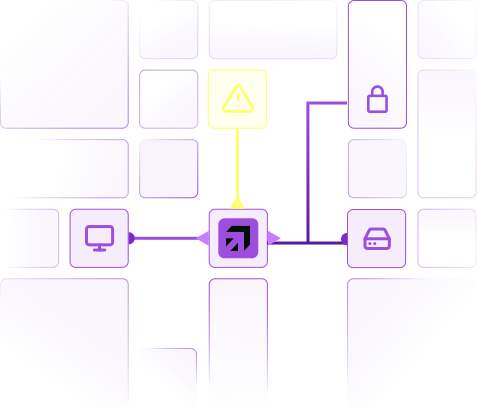
Privilege Escalation and Credential Exposure
Testing for misconfigured service accounts, weak local administrator policies, Kerberoasting opportunities, pass-the-hash attack paths, and credential caching weaknesses that enable unauthorized privilege gains.
.svg)
Internal Attack Path Simulation
End-to-end mapping of realistic attack chains from initial foothold to domain compromise, documenting every step with evidence to demonstrate the actual business impact of internal control gaps.
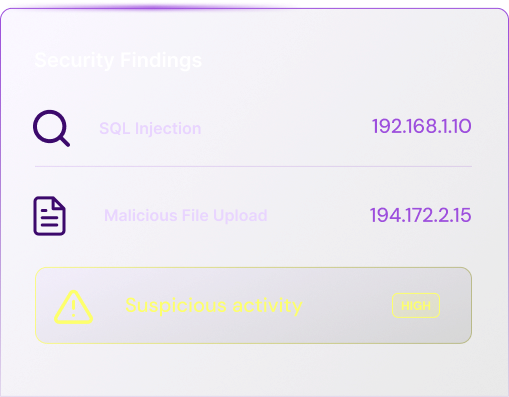
Built for Startups Preparing for Compliance and Organizations Requiring Third Party Testing
How Much Does Penetration Testing Cost for Startups
Penetration testing cost for startups varies based on scope, environment complexity, and the type of assessment required. A focused internal penetration test covering a startup-scale environment typically ranges from a few thousand dollars to the mid-five figures, depending on the number of systems in scope, the access level provided, and whether a retest is included. At IVASTA Security, scoping is done carefully before any pricing is confirmed, so you are not paying for a generic engagement that does not reflect your actual environment. Startups preparing for SOC 2, approaching enterprise sales cycles, or seeking investor-level security assurance get findings that are scoped to their stage, not priced for an enterprise with a hundred-person IT team.
Typical triggers: SOC 2 Type II readiness, seed or Series A due diligence, first enterprise customer security questionnaire, post-incident internal review.
Penetration Testing Partner for Compliance Audit Firms
Audit firms and managed security service providers require offensive security partners who deliver technically rigorous, independently verified reports their clients and auditors can rely on. As a penetration testing partner for compliance audit firms, IVASTA Security provides thorough external assessments that satisfy SOC 2, PCI DSS, ISO 27001, and HIPAA evidence requirements. Every report is produced by certified professionals, documented with validated findings, and structured to meet the expectations of third-party reviewers without requiring additional interpretation.
Typical triggers: SOC 2 Type II audit preparation, annual compliance testing cycle, auditor evidence requirement, enterprise client due diligence.
A Structured Process from Scoping to Remediation Validation
Every IVASTA Security Security engagement follows a three-phase methodology designed to ensure technical depth, clear communication, and measurable risk reduction from the initial scoping call through to validated remediation.
Scoping and Planning
Penetration Testing
Reporting and Retest Validation
.svg)
Stay Ahead of Real-World Internal Threats
Internal threats are not limited to malicious insiders. Phishing campaigns, supply chain compromises, and external breaches that bypass perimeter controls all result in an attacker operating inside your environment with varying levels of access. Our methodology is built to find what they would find and show you what they could do with it.
What our internal penetration testing identifies:
- Assumed breach simulation paths from low-privilege foothold to domain-level compromise
- Internal port and service exposure across network segments and VLAN boundaries
- Privilege escalation paths through misconfigured services, scheduled tasks, and local admin policies
- Authorization bypass attacks targeting internal admin panels and management interfaces
- Active Directory exposure through Kerberoasting, AS-REP roasting, and delegation abuse
- Configuration weaknesses in internal servers, shared drives, and legacy infrastructure
- Insecure data handling through unencrypted internal file shares and credential caching
- Internal pivot scenarios exploiting trust relationships between systems and service accounts
- Cryptographic failures in internal certificate management and authentication protocols


.svg)
Our Methodology
We operate with an 80% manual, 20% automated approach. Automated tools support initial host discovery and service enumeration, but our certified professionals conduct all attack chain analysis, privilege escalation attempts, and lateral movement simulation. Internal penetration testing is where the distinction between automated scanning and real adversarial testing is most visible. A scanner will find open ports and known CVEs. A skilled tester will find the Kerberoastable service account with a weak password, the misconfigured trust relationship between network segments, and the path from a compromised workstation to your domain controller.
Our testers hold OSCP, OSCP+, OSEP, OSWE, CREST, Certified Red Team Professional, and Burp Suite Certified Practitioner certifications. These are hands-on, examination-based qualifications that validate real attacker capability in internal network environments, not vendor certifications awarded through coursework alone.
Retest Assessment
Remediating an internal control gap and confirming it no longer allows the original attack chain to succeed are two different things. Our optional retest assessment validates that every identified finding has been correctly resolved and cannot be re-exploited using the original technique or a variant. For SOC 2 and compliance-driven engagements, the digitally signed remediation verification certificate we issue on successful completion provides formal, audit-ready documentation that your auditors and enterprise clients can rely on.
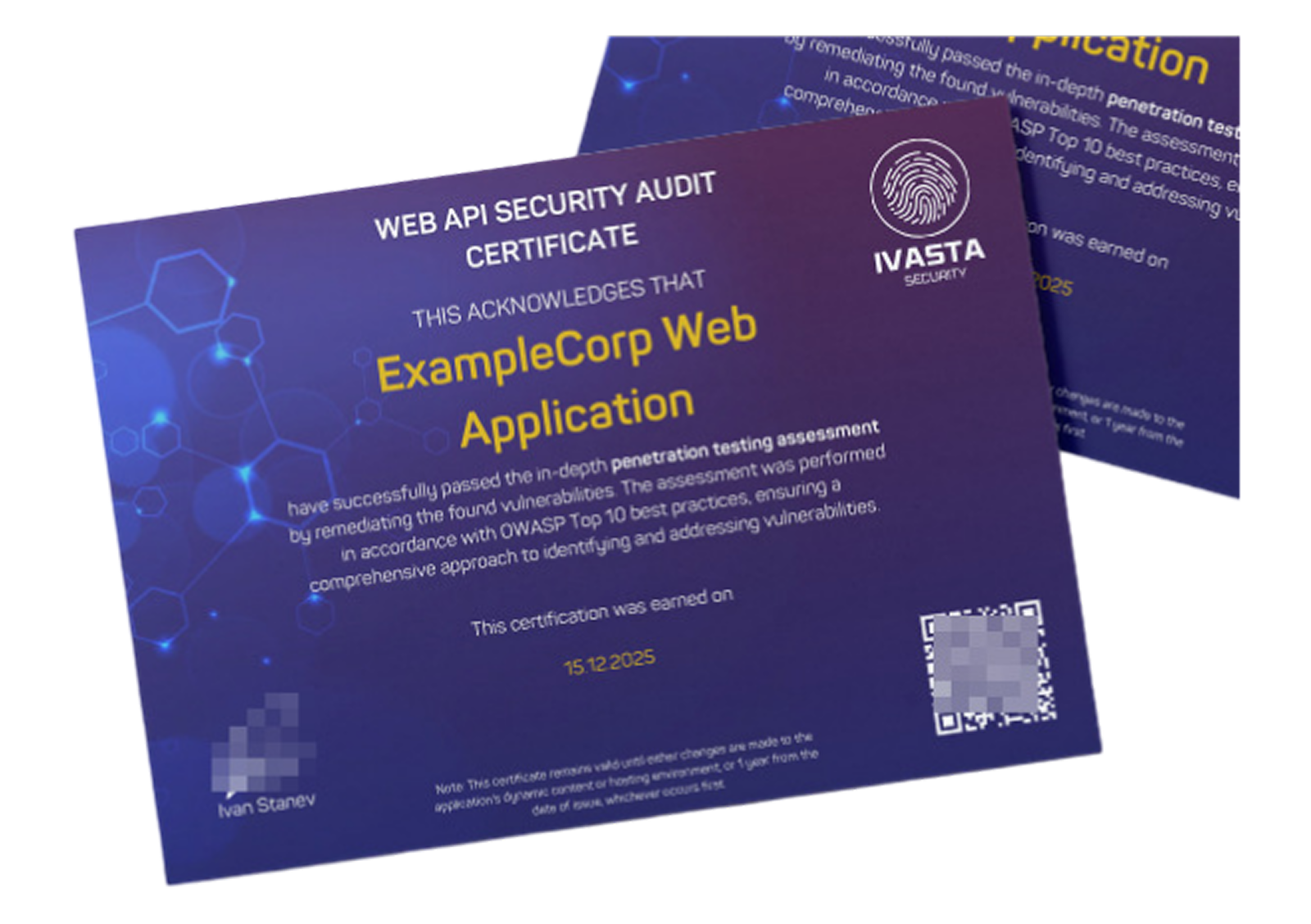
Do Not Wait for a Breach to Discover What Is Exposed Inside Your Network
See What We Can Do For You
Stay ahead of real-world threats
Our Methadology
Lorem ipsum dolor sit amet consectetur adipiscing eli mattis sit phasellus mollis sit aliquam sit nullam.
Lorem ipsum dolor sit amet consectetur adipiscing eli mattis sit phasellus mollis sit aliquam sit nullam.Lorem ipsum dolor sit amet consectetur adipiscing eli mattis sit phasellus mollis sit aliquam sit nullam.Lorem ipsum dolor sit amet consectetur adipiscing eli mattis sit phasellus mollis sit aliquam sit nullam.
Frequently Asked Questions
What is internal penetration testing and how is it different from external testing?
.svg)
Internal penetration testing simulates an assumed breach scenario, starting from a position inside your network that reflects a compromised endpoint, a phished user account, or a malicious insider. External penetration testing starts from outside the perimeter and attempts to find a way in. Both assessments serve different purposes and address different parts of your attack surface. Internal testing answers the question of how far an attacker could progress once they already have initial access, which external testing cannot answer on its own.
How much does penetration testing cost for startups?
Penetration testing cost for startups depends on scope, environment size, and the type of assessment required. A focused internal penetration test for a startup-scale environment typically falls in the range of a few thousand dollars to the mid-five figures, depending on the number of systems in scope, the access level provided, and whether a retest is included. Startups pursuing SOC 2 Type II certification or approaching enterprise sales cycles should budget for a scoped engagement rather than a templated one. At IVASTA Security, scoping is done before pricing is confirmed, so the cost reflects your actual environment and compliance requirements rather than a one-size engagement model.
Does SOC 2 require third party penetration testing?
SOC 2 Type II does not mandate penetration testing in the same way PCI DSS does, but it is effectively required in practice. SOC 2 auditors assess whether your organization has implemented controls to identify and respond to security risks, and penetration testing is one of the most direct ways to demonstrate that internal controls have been tested against realistic attack scenarios. Third party penetration testing for a SOC 2 audit carries more weight than self-assessment because it provides independent, qualified evidence that auditors can rely on. Most organizations pursuing SOC 2 certification include penetration testing as a core part of their audit preparation.
What does an assumed breach scenario mean in the context of internal penetration testing?
An assumed breach scenario means the engagement starts from a position inside your network rather than attempting to breach the perimeter first. This reflects the reality that many successful attacks do not involve sophisticated external exploitation. Phishing, credential theft, supply chain compromise, and insider access all result in an attacker who already has a foothold. By starting from that position, internal penetration testing focuses entirely on what happens next, how far lateral movement can go, what privileges can be escalated, and what sensitive systems or data can be reached.
What internal systems and environments do you test?
Our internal penetration testing covers Windows and Linux server environments, Active Directory infrastructure, internal web applications and admin panels, database servers, file share systems, internal APIs and microservices, network segmentation controls, VPN and remote access configurations, and cloud-connected internal systems. The scope is defined during the scoping phase based on your specific environment and the compliance or security objectives of the engagement.
How is the engagement conducted remotely?
Internal penetration testing can be conducted remotely through a secure VPN connection or on-site depending on your environment and preference. Remote testing is the standard approach for most engagements and is equally thorough for environments that can provide appropriate network-level access. On-site testing is available when physical access or proximity to specific network segments is required. Access requirements and logistics are agreed during the scoping phase.
What compliance frameworks require or recommend internal penetration testing?
Internal penetration testing is required or strongly recommended under SOC 2 Type II, PCI DSS, ISO 27001, HIPAA, NIST 800-53, and FedRAMP. For startups operating under investor or enterprise customer security requirements, third party internal penetration testing is increasingly expected as part of vendor security reviews and due diligence processes. Organizations pursuing FedRAMP authorization or handling federal data are subject to specific internal testing requirements under NIST 800-53 controls.
How long does an internal penetration testing engagement take?
Most focused internal penetration tests take between one and two weeks from the start of testing to final report delivery, depending on environment size and scope. Larger environments covering multiple network segments, hybrid cloud infrastructure, or extensive Active Directory deployments may require extended timelines. Scoping defines the timeline accurately before testing begins, so your compliance and audit schedules are not disrupted by unexpected delays.
What does the internal penetration testing report include?
Your report includes an executive summary for non-technical stakeholders, a detailed technical findings section with full attack chain documentation and exploitation evidence, severity ratings based on real-world business impact, and specific remediation guidance your infrastructure and security team can act on without interpretation. For SOC 2 and compliance engagements, findings are structured to satisfy third party auditor evidence standards. Clients who complete the retest assessment also receive a digitally signed remediation verification certificate.
Can IVASTA Security provide internal penetration testing reports formatted for SOC 2 auditors?
Yes. We structure internal penetration testing reports to meet the evidence standards that SOC 2 auditors require, including clear documentation of scope, methodology, findings with exploitation evidence, and remediation status. For organizations working to a specific audit timeline, we align the engagement to ensure testing is completed and remediation is verified before the audit window opens. We can also work directly with your auditor or compliance consultant to confirm report format requirements before delivery.
Let's Protect Your
Business Now!