Vulnerability Assessment Services for Infrastructure, Applications, and Networks
We provide your security team with a comprehensive, manually validated view of known vulnerabilities across your environment, helping you eliminate false positives and prioritize remediation with confidence.

Simulating Threats

Streamlining Remediation

Ensuring Compliance
Identify Weaknesses Before They Become Incidents
Every organization has a layer of security exposure that routine monitoring does not surface. Unpatched software, misconfigured services, open ports with no business justification, and accounts carrying permissions nobody reviewed last year sit quietly inside networks and applications until an attacker finds them first. A vulnerability assessment gives your team the structured visibility to find these weaknesses on your own terms, before an incident forces the issue.
IVASTA Security delivers vulnerability assessment services that go beyond raw scanner output. Every engagement combines automated scanning across your full asset inventory with manual validation by certified security professionals who review each finding for real-world exploitability, filter out false positives, and produce prioritized remediation guidance your team can act on without interpretation. Whether you are preparing for a compliance audit, responding to a board-level risk review, or simply building a clearer picture of your security posture, our assessments give you findings you can trust and a remediation roadmap that is practical from day one.

What Our Vulnerability Assessment Covers
Our certified security professionals assess every layer of your environment, from network perimeter and internal infrastructure through to web applications, APIs, and cloud workloads. We identify known vulnerabilities using cross-referenced CVE databases, flag service misconfigurations that expand your attack surface, and surface patch gaps that leave systems exposed to exploitation.
Where applicable, we assist in identifying externally exposed assets, forgotten subdomains, and internet-facing services that may not be part of the organization's actively maintained inventory. This external exposure review adds context to the assessment and helps surface risks that internal asset registers do not always capture.
Our vulnerability assessment services cover:
Network and Infrastructure Assessment
Evaluation of routers, firewalls, switches, servers, and endpoint devices for open ports, weak protocols, default credentials, outdated software versions, and misconfigured services that expand your external and internal attack surface.
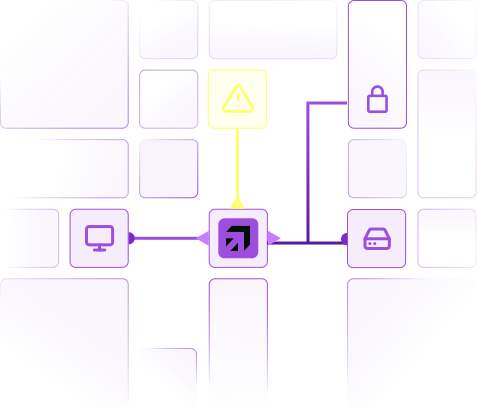
Application and API Assessment
Automated assessment of web applications and APIs for known vulnerabilities, outdated components, security misconfigurations, exposed services, and common OWASP vulnerability patterns, followed by manual validation of identified findings.For full manual web application or API penetration testing, see our Web Application Penetration Testing and API Penetration Testing services.
.svg)
Cloud and Configuration Assessment
Evaluation of cloud workloads, storage resources, virtual machines, and container environments across AWS, Azure, and GCP for misconfigurations, exposed assets, overpermissioned accounts, and patch gaps unique to cloud infrastructure.
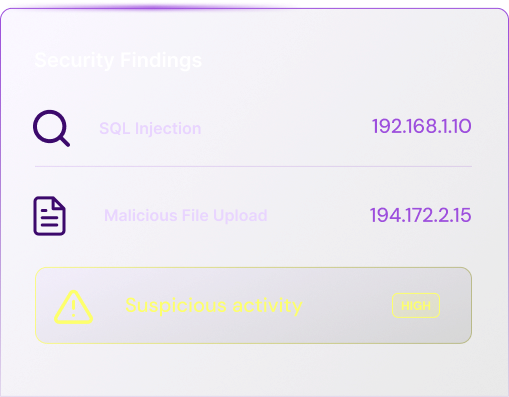
Built for Organizations That Need More Than a Scanner Report
Vulnerability Assessment for SaaS Companies and Growing Businesses
SaaS companies, technology businesses, and growing organizations accumulate technical debt and security exposure as they scale. A professional vulnerability assessment gives your team a verified, prioritized view of the weaknesses sitting inside your network, applications, and infrastructure, structured around real-world risk rather than CVSS scores alone. Common triggers include pre-launch security reviews, SOC 2 Type II readiness, enterprise buyer security questionnaires, cyber insurance applications, and board-level risk requests. Our findings give your engineering and operations teams a clear, actionable remediation list rather than a raw list of hundreds of scanner findings to interpret on their own.
Vulnerability Assessment Partner for Compliance Audit Firms and MSSPs
Compliance audit firms, managed security service providers, and consultancies require a specialist vulnerability assessment partner who delivers technically credible, independently validated findings their clients and auditors can rely on. IVASTA Security provides structured vulnerability assessments that satisfy the evidence requirements of SOC 2, PCI DSS, ISO 27001, HIPAA, and NIST 800-53 control frameworks. Every report is produced by certified professionals, structured for third-party reviewer expectations, and free from the noise that pure scanner output introduces. We support white-label and referral arrangements for firms that need a trusted external assessment capability for client engagements.
A Structured Process from Scoping to Remediation Validation
Every IVASTA Security engagement follows a three-phase methodology that ensures technical depth, clear communication, and measurable risk reduction from the initial scoping call through to validated remediation.
Scoping and Planning
Assessment and Manual Validation
Reporting and Retest Validation
A Structured Process from Scoping to Remediation Validation
Every IVASTA Security engagement follows a three-phase methodology that ensures technical depth, clear communication, and measurable risk reduction from the initial scoping call through to validated remediation.
Phase 01 — Scoping and Planning
We define your full asset scope, the environments under assessment, access requirements, testing timelines, and reporting expectations. Scoping is thorough so assessment begins with full clarity and no coverage gaps.
Phase 02 — Assessment and Manual Validation
Automated scanning identifies known vulnerabilities, open ports, and configuration weaknesses across your full asset inventory. Every finding is then manually reviewed by certified professionals to confirm exploitability, remove false positives, and assess real-world business impact.
Phase 03 — Reporting and Retest Validation
You receive a structured report with prioritized findings, severity ratings tied to genuine business risk, and clear remediation guidance. Once fixes are implemented, we can conduct a formal retest and issue a signed verification certificate confirming remediation.
.svg)
Stay Ahead of Real-World Security Risks
Known, unpatched vulnerabilities account for a significant share of breaches every year. Attackers routinely exploit weaknesses that organizations already knew about, simply because no structured process existed to prioritize and remediate them before the window of exposure widened.
Our vulnerability assessment services are designed to close that gap. We give your team the structured visibility and prioritized remediation guidance to address real exposure before it becomes an operational or reputational incident.
What our vulnerability assessment services identify:
- Unpatched software and outdated system components with known CVEs that represent active exploitation targets
- Open ports and exposed services with no current business justification that expand your perimeter attack surface
- Misconfigured network devices, firewalls, and security group rules that weaken your infrastructure security posture
- Default credentials and weak authentication configurations on servers, network devices, and application services
- Known web application and API vulnerabilities, including detectable injection flaws, outdated components, exposed services, security misconfigurations, and common OWASP vulnerability patterns, followed by manual validation of identified findings
- Cloud storage misconfigurations including publicly accessible buckets, unencrypted snapshots, and exposed database instances
- Excessive user permissions and privilege creep that violate least-privilege principles across accounts and services
- Outdated and end-of-life software running across endpoints, servers, and cloud workloads without active patch coverage


.svg)
Our Methodology
Our vulnerability assessment service follows an automated-first methodology. Automated scanning tools systematically identify known vulnerabilities, open ports, outdated components, and configuration weaknesses across your full asset inventory. Our certified security professionals then take over the manual validation layer, reviewing each finding to confirm real-world exploitability, eliminate false positives that would otherwise send your team chasing non-issues, and prioritize remediation based on genuine business risk rather than raw CVSS scores.
This approach is intentionally different from a penetration test. A penetration test involves our professionals manually simulating real attack scenarios, chaining vulnerabilities together, and demonstrating what an attacker could achieve with initial access. A vulnerability assessment is broader in coverage, more cost-effective, and well-suited to regular security reviews, compliance requirements, and organizations that want a structured, prioritized view of their exposure without the scope and price point of a full manual engagement. If you need comprehensive manual testing of your web applications or APIs specifically, our Web Application Penetration Testing and API Penetration Testing services are designed for that purpose.
Our professionals hold OSCP, OSCP+, OSEP, OSWE, CREST, Certified Red Team Professional, and Burp Suite Certified Practitioner certifications. These are examination-based qualifications that validate hands-on offensive security capability. Every vulnerability assessment engagement is overseen and validated by professionals who understand how attackers think, not just how scanners report.
Retest Assessment
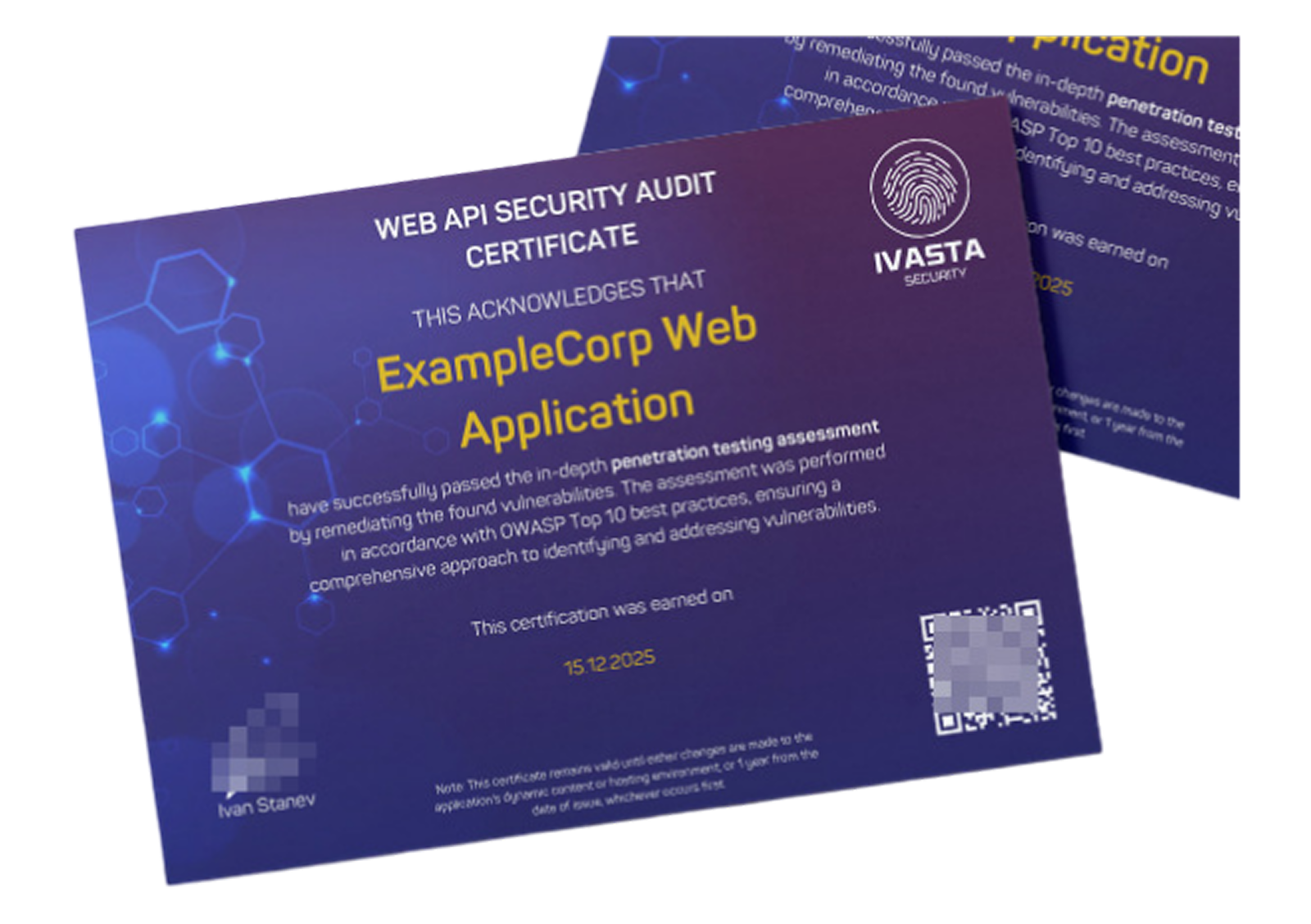
Fixing a vulnerability and confirming the fix actually holds are two different things. Our optional retest assessment verifies that every identified weakness has been correctly remediated and is no longer exploitable under real conditions. We re-examine each finding in scope after your team has applied the recommended remediation steps, confirming the patch or configuration change resolved the issue and did not introduce new exposure in the process.
Upon successful completion, we issue a digitally signed verification certificate that serves as formal evidence for compliance auditors, enterprise buyers, and internal governance stakeholders. This closes the loop on your vulnerability assessment engagement and gives your stakeholders documented assurance rather than an assumption that remediation worked.
Do Not Wait for a Breach to Discover Your Weaknesses
Stay ahead of real-world threats
See What We Can Do For You
Our Methadology
Lorem ipsum dolor sit amet consectetur adipiscing eli mattis sit phasellus mollis sit aliquam sit nullam.
Lorem ipsum dolor sit amet consectetur adipiscing eli mattis sit phasellus mollis sit aliquam sit nullam.Lorem ipsum dolor sit amet consectetur adipiscing eli mattis sit phasellus mollis sit aliquam sit nullam.Lorem ipsum dolor sit amet consectetur adipiscing eli mattis sit phasellus mollis sit aliquam sit nullam.
Frequently Asked Questions
What is a vulnerability assessment and how does it work?
.svg)
A vulnerability assessment is a structured process that identifies, classifies, and prioritizes security weaknesses across an organization's systems, networks, and applications. It works by combining automated scanning tools that cross-reference your environment against known vulnerability databases with manual validation by certified professionals who confirm exploitability and business impact. The output is a prioritized remediation report that tells your team exactly what to fix and in what order, based on real-world risk rather than raw scanner scores.
What is the difference between a vulnerability assessment and a penetration test?
A vulnerability assessment identifies and prioritizes security weaknesses across your environment but does not actively attempt to exploit them. A penetration test goes further by having certified professionals manually simulate real attack scenarios, chaining vulnerabilities together to demonstrate what an attacker could actually achieve with initial access. Vulnerability assessments are broader in coverage and better suited to regular, structured security reviews. Penetration tests are deeper in scope and better suited to validating specific systems or meeting compliance requirements that demand evidence of active exploitation attempts.
How often should an organization conduct vulnerability assessment services?
Most organizations benefit from running a comprehensive vulnerability assessment at least once per quarter, with automated scanning running on a more frequent basis for critical assets. Compliance frameworks including PCI DSS require external vulnerability scans quarterly at minimum. Any significant infrastructure change, major product release, or new environment deployment should also trigger an assessment cycle, because new assets and configuration changes regularly introduce exposure that previous assessments did not cover.
Which compliance frameworks require vulnerability assessment services?
Vulnerability assessment services are required or strongly recommended by PCI DSS, SOC 2 Type II, ISO 27001, HIPAA, NIST 800-53, FedRAMP, and Cyber Essentials. PCI DSS requires quarterly external vulnerability scans conducted by an Approved Scanning Vendor and rescans after significant environment changes. ISO 27001 and SOC 2 frameworks require evidence of a consistent process for identifying and remediating vulnerabilities as part of their risk management and asset security control areas.
What assets does a vulnerability assessment cover?
A professional vulnerability assessment covers your full asset inventory including network infrastructure (routers, switches, firewalls), servers and endpoints, web applications and APIs, cloud workloads across AWS, Azure, and GCP, database systems, and wireless networks. Where applicable, we also assist in identifying externally exposed assets, forgotten subdomains, and internet-facing services that may not be part of your actively maintained inventory.
How is vulnerability assessment different from a vulnerability scan?
A vulnerability scan is the automated step within a broader vulnerability assessment. The scan uses tools to compare your systems against databases of known weaknesses and produces raw output listing every flagged item. A vulnerability assessment interprets that raw output, removes false positives through manual validation, prioritizes findings based on genuine exploitability and business impact, and produces structured remediation guidance. A scan tells you what the tool found. An assessment tells you what actually matters and what to do about it.
Will a vulnerability assessment disrupt our production systems?
A professionally conducted vulnerability assessment is designed to identify weaknesses without causing downtime or operational disruption. Scanning techniques are configured within defined parameters agreed upon during scoping. For particularly sensitive systems or environments carrying critical production traffic, safe check modes and maintenance window scheduling are available. Any assessment activity that carries even a minor risk of disruption is discussed and agreed upon before it takes place.
What deliverables does IVASTA Security provide after a vulnerability assessment?
Every engagement closes with a structured vulnerability assessment report that includes an executive summary written for non-technical stakeholders, a detailed technical findings section with evidence for each weakness, severity ratings tied to real-world business impact rather than CVSS scores alone, and clear remediation guidance your engineering and operations teams can act on without requiring further interpretation. For compliance use cases, the report is structured to satisfy third-party auditor evidence requirements. Clients who opt for the retest assessment also receive a digitally signed remediation verification certificate.
Can vulnerability assessment services be conducted on a white-label basis for audit firms?
Yes. IVASTA Security works with compliance audit firms and managed security service providers as a specialist vulnerability assessment partner on both a white-label and referral basis. When operating as a white-label partner, we conduct the full assessment and produce a report your firm presents under your own brand. The technical depth, certification credentials behind the work, and report quality remain consistent regardless of the delivery arrangement. Engagement terms and confidentiality requirements are agreed upon before any assessment begins.
How is a vulnerability assessment scoped for organizations with complex or multi-environment infrastructure?
Scoping for complex environments starts with a thorough discovery call where we map your full asset footprint, including on-premises infrastructure, cloud workloads, web applications, API endpoints, and any third-party integrations that extend your attack surface. We agree on which systems and environments are in scope, what access levels are required, and what rules of engagement apply before any scanning begins. For organizations with regulated environments or production systems that require special handling, scope documentation captures exactly what will be tested, in what manner, and under what conditions, so there is no ambiguity during the engagement.
Let's Protect Your
Business Now!