Expert Penetration Testing Services for Companies Across the USA
We simulate real attacker behavior to uncover the vulnerabilities that automated scanners miss, before a real threat actor finds them first.
Trusted Partners








Why Security Teams
Trust Us
10+ Years
Under 2 hours per referral engagement,
from introduction to delivery
100%
Findings Manually Validated, Zero
Automated-Only Reports
OSCP · OSCP+ · OSEP · OSWE · CREST
Industry-Leading Certifications Held by Our Team
1–2 Weeks
Typical Engagement Duration, Fast
Without Cutting Corners
Built for Two Types of Buyers, Both Get the Same Depth
Our clients range from growth-stage SaaS companies undergoing their first security audit to established audit firms and MSSPs that need a trusted third-party testing partner. Regardless of which category you fall into, every engagement is scoped carefully, executed manually by certified professionals, and delivered with a report your team, or your client's auditors, can act on immediately.
End Clients Security Testing for Technology & Enterprise Teams.
You've built something worth protecting. Our penetration testing services help CTOs, DevOps leads, and security teams at mid-sized technology companies, fintech platforms, and SaaS providers validate their defenses before threat actors or enterprise buyers find the gaps first. From web application pen testing to cloud security assessments, we cover your entire attack surface.
Audit Firms & MSSPs White-Label & Third-Party Pen Testing for Compliance Audits.
If you're an audit firm, compliance consultancy, or managed security services provider that needs a specialist offensive security partner, IVASTA Security delivers the technical depth your clients require. We provide thorough, independently verified penetration testing reports that satisfy SOC 2, HIPAA, PCI-DSS, and ISO 27001 audit requirements, produced by certified professionals, not scanning tools.
Security isn’t about running more tools.
It’s about understanding how real attackers think — and where your systems actually break.
Why Manual Penetration Testing Outperforms Automated Scanning
Automated vulnerability scanners are fast, but they're blind to the vulnerabilities that actually cause breaches. Business logic flaws, chained authorization bypasses, multi-step exploit sequences, and workflow manipulation are consistently missed by tools. They require human intuition, creative thinking, and an attacker's mindset. IVASTA Security operates with an 80% manual, 20% automated approach, using tools to support reconnaissance and surface-level identification, but relying on our certified offensive security professionals to find what actually matters. Our case studies demonstrate critical findings uncovered solely through manual, adversarial testing that automated tools completely missed.
(1).png)
Manual-First Methodology.
We apply a proven manual approach refined over years of hands-on experience. Our testers don't rely on checklists, they examine attack vectors specific to your industry, business context, and technology stack.
(1).png)
Every assessment is carried out by professionals holding OSCP, OSCP+, OSEP, OSWE, CREST, Certified Red Team Professional, and Burp Suite Certified Practitioner certifications, not junior analysts running scripted tools.
(1).png)
Actionable Findings with Remediation Guidance.
We deliver structured, prioritized reports with clear remediation steps, severity ratings aligned to real-world exploitability, and a retest validation option to confirm your fixes actually hold.
The Numbers That Matter
%
0
1-2
Penetration Testing & Security Assessment Services
(1).png)

(1).png)

(1).png)
.png)
.png)
A Structured Process from Scoping to Remediation Validation
Every IVASTA Security engagement follows a three-phase methodology designed to ensure technical depth, clear communication, and measurable risk reduction, from initial scoping call to validated remediation.
Scoping & Planning
We begin by defining your attack surface, access levels, environments, timelines, and reporting expectations. Scoping is thorough so testing begins without ambiguity, and without scope creep.
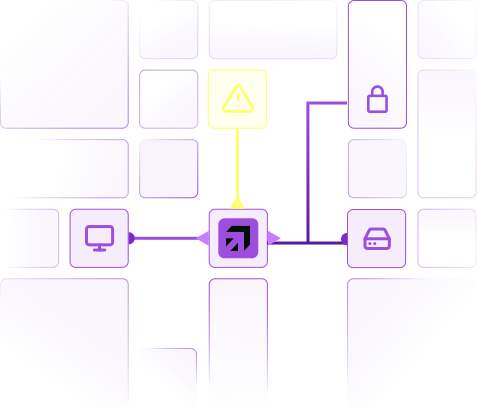
Penetration Testing
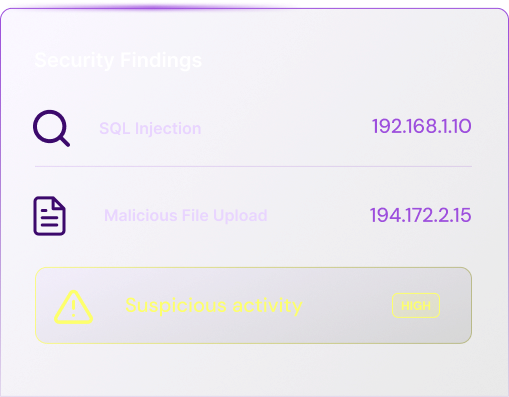
Our certified offensive security professionals simulate realistic attack scenarios across the agreed scope. All findings are manually validated for true exploitability and contextualized against real-world business risk, not just CVSS scores.
.svg)
Reporting & Retest Validation
You receive a structured, prioritized report with clear remediation guidance and severity ratings. Once fixes are implemented, we offer a formal retest to validate that vulnerabilities have been properly closed, not just patched on paper.
.svg)
Security Testing Across Regulated and High-Risk Industries
Our team has delivered penetration testing engagements across industries where data integrity, user trust, and regulatory compliance are non-negotiable.
Industries:
BFSI & Fintech | Healthcare | SaaS & Software Products | Manufacturing | Oil & Gas | Retail & Wholesale | Logistics | Professional Services | MSSP & Managed IT
ONE SHORT PARAGRAPH
We understand that a SOC 2 Type II audit for a healthcare SaaS platform requires a different depth and framing than an internal network assessment for a manufacturing company. That's why every engagement begins with a thorough discovery phase, so our testing reflects the actual risk landscape of your industry, not a generic checklist. We also work directly with compliance teams and external auditors to ensure reports meet specific framework requirements.

Client Success Stories
"Our collaboration with IVASTA Security provided meaningful value across our web application and partner API integrations. The engagement was structured and focused on realistic abuse scenarios. The final report was clear, actionable, and aligned with our security goals. We regard IVASTA Security as a trusted long-term security partner."

"Working with IVASTA Security gave us clarity around real security risks in our platform. The testing went beyond surface-level vulnerabilities and uncovered business logic issues we hadn’t considered. The communication was direct, technical, and actionable - exactly what we needed as a growing SaaS company."
.png)
Ready to Find Out What's Actually Exposed?
See What We Can Do For You
Frequently Asked Questions
What is penetration testing and why do companies need it?
.svg)
Penetration testing, often called pen testing, is a structured, authorized simulation of real-world cyberattacks conducted by certified security professionals. The goal is to identify vulnerabilities, misconfigurations, and exploitable weaknesses before malicious actors do. Companies need penetration testing to validate their actual security posture (as opposed to what their security policies claim), satisfy regulatory requirements like SOC 2, PCI-DSS, HIPAA, and ISO 27001, and protect sensitive customer and business data from increasingly sophisticated threats.
What is the difference between penetration testing and a vulnerability assessment?
A vulnerability assessment identifies and catalogs known security weaknesses using automated scanners, often with manual review to reduce false positives. Penetration testing goes further: a certified tester actively attempts to exploit identified vulnerabilities, chain multiple weaknesses together, and simulate the full attack path a real threat actor would follow. A vulnerability assessment tells you where weaknesses exist; a penetration test shows you what damage they can actually cause.
How often should a company conduct a penetration test?
Most security frameworks and compliance standards recommend at least one penetration test per year. However, companies that ship significant new features, undergo major infrastructure changes, or are approaching enterprise sales or compliance audits should consider targeted assessments more frequently. SaaS companies handling sensitive data often run pen tests before major product launches or before submitting for SOC 2 certification.
What does a penetration testing engagement involve?
A typical engagement involves three phases: (1) Scoping and planning, where the attack surface, access levels, objectives, and timelines are defined; (2) Testing, where certified professionals simulate real attack scenarios using manual adversarial techniques across the agreed scope; and (3) Reporting, where all findings are documented with severity ratings, exploitation evidence, and clear remediation guidance. Post-remediation retest validation is also available to confirm that fixes are effective.
What is the difference between black box, gray box, and white box penetration testing?
These terms describe how much information the tester is given before the assessment begins. In a black box test, the tester operates with no prior knowledge of the target, simulating an external attacker with no insider information. In a gray box test, the tester has partial information such as user credentials, network diagrams, or architecture overviews. In a white box test, the tester has full access to source code, server configurations, and documentation, enabling the most thorough identification of internal weaknesses.
What compliance frameworks require penetration testing?
Several major compliance standards require or strongly recommend regular penetration testing, including SOC 2 Type II, PCI-DSS (Payment Card Industry Data Security Standard), HIPAA (for healthcare technology companies), ISO 27001, NIST 800-53, and FedRAMP. Companies pursuing enterprise sales deals increasingly face security questionnaires from prospective clients that require evidence of recent third-party penetration testing.
How long does a penetration test take?
Engagement duration depends on scope and complexity, but most focused penetration tests, covering a web application, API, or external network, take between one and two weeks from testing start to final report delivery. Larger or more complex assessments covering multiple systems, internal networks, and cloud environments may take longer. At IVASTA Security, scoping is done carefully upfront to set accurate timelines before testing begins.
Can penetration testing cause disruption to production systems?
A professionally run penetration test is designed to identify vulnerabilities without causing damage or downtime to production systems. At IVASTA Security, all testing is conducted within a controlled methodology, and any high-risk techniques that could affect system stability are discussed with the client and agreed upon during the scoping phase. Testing against production environments is common and manageable when handled by experienced professionals.
What makes a penetration testing report actually useful?
A useful penetration testing report does three things well: it documents findings with clear evidence of exploitability (not just theoretical risk), it prioritizes vulnerabilities by real-world business impact rather than raw CVSS scores alone, and it provides specific, implementable remediation guidance that developers and security teams can act on immediately. Reports that simply list CVEs without context or remediation steps deliver compliance value but limited security value.
How do audit firms and MSSPs work with penetration testing companies?
Audit firms, compliance consultancies, and managed security services providers (MSSPs) often partner with specialist penetration testing companies to provide independent, technically rigorous security assessments for their clients. IVASTA Security works with audit partners on a confidential basis, delivering detailed, audit-ready reports that satisfy third-party evidence requirements for SOC 2, PCI-DSS, and ISO 27001 audits. If your firm needs a trusted offensive security partner, we are open to discussing white-label and referral arrangements.
Let's Protect Your
Business Now!